Most roofing websites are built like generic contractor sites with a roof photo slapped on top. They miss how roofing actually works.
Homeowners find roofers in two moments: right after a storm, and months before they budget for a reroof. Your site has to book both. Here’s how.
1. A storm-response page that ranks locally
After a storm, homeowners Google “roofer near me” and “emergency roof repair [city].” The roofers who rank first get called first. Build a dedicated storm-response page for each major town you serve, with fast load times, a click-to-call button, and a photo of your crew actually doing emergency work.
2. Before-and-after galleries that prove the work
Roofing is a high-trust, high-ticket sale. A homeowner isn’t handing you $15,000 because you have a pretty website. They’re doing it because they saw ten finished jobs that look like theirs. Real before-and-after photos beat stock photos and hero sliders by a mile.
3. Financing options stated clearly
A reroof costs $8,000 to $30,000. Most homeowners can’t write that check without financing. Put your financing partner (GreenSky, Hearth, Synchrony) on every service page with a “from $X/month” calculator. Sites that show financing convert 2-3x better than sites that hide it.
4. Insurance claim help as a service
Half of roofing work in storm-heavy markets is insurance-funded. If you help with claims, say so loudly. A dedicated “We Work With Insurance” page with the steps, required documents, and what you handle vs. what the homeowner handles will convert skeptical leads.
5. Real crew photos, not stock
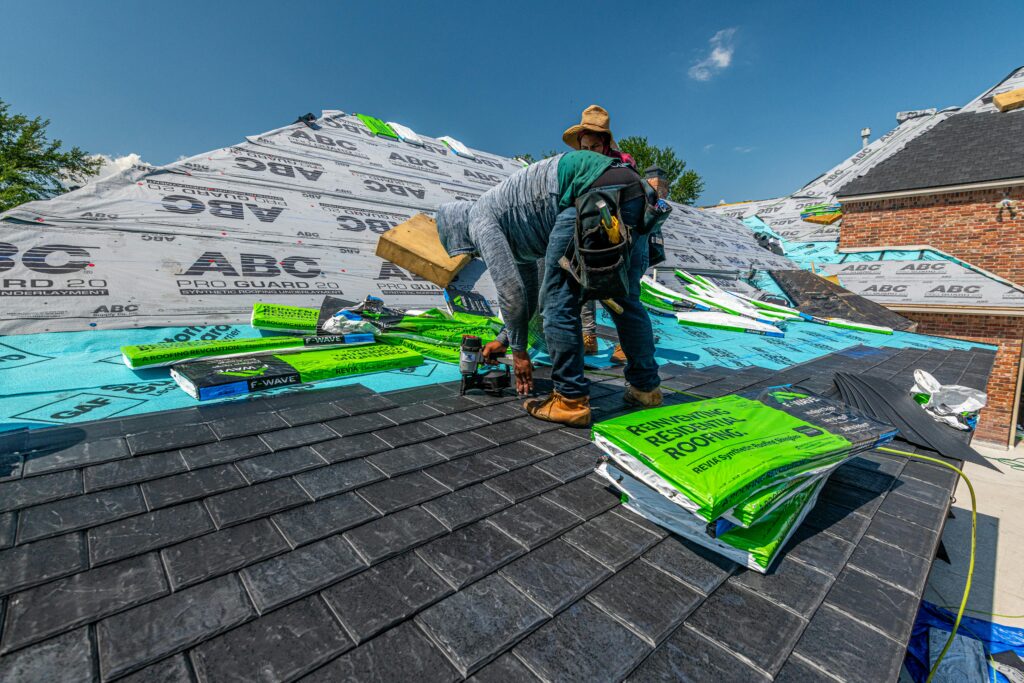
Roofing buyers are suspicious. They’ve heard the stories about storm chasers. A website with stock photos of actors in hard hats makes you look like one of them. Photos of your actual trucks, your actual crew, and your actual jobs in your actual service area flip the trust switch.
6. Service pages for each roof type
One page for “Asphalt Shingle Roofing,” one for “Metal Roofing,” one for “Tile Roofing,” one for “Flat/TPO Roofing.” Each ranks independently on Google for different keywords. A single “Services” dropdown does not rank.
7. Click-to-call everywhere
Roofing is urgent. A homeowner with a leaking roof is not filling out a contact form. Click-to-call button sticky on mobile, visible on every page, one tap away.
8. Google Business Profile connected and optimized
The map pack is where roofing jobs get booked. License number verified, service areas set, review requests automated, weekly photo uploads. No amount of website polish beats a strong GBP for local roofing.
What a Roofer Website Should Cost
Under $500 is a DIY placeholder. Fine if you’re just starting out, but roofing leads are too valuable to lose to a bad site long-term.
$900 to $2,000 is where most roofers should be. A professional roofing site built by people who understand trade businesses — not a generalist agency.
$3,000 to $8,000 pays for agency overhead, not better results. The actual website work is the same.
$10,000+ makes sense if you’re building a multi-location brand. For most single-location roofers, it’s overkill.
Journela builds roofing websites for $900 flat, delivered in 5 days. You own the domain, the hosting, and every file. No lock-in.